
What do surfactant manufacturing services include?
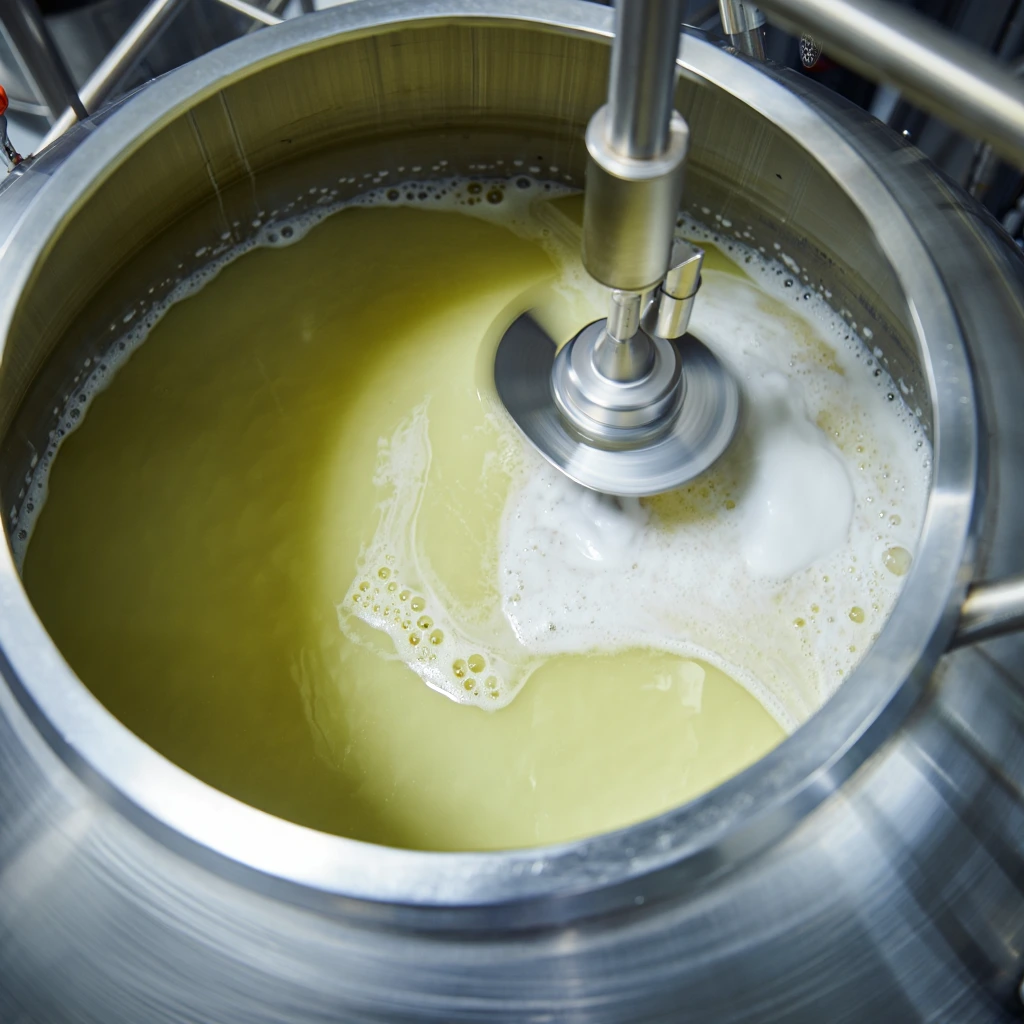
Surfactant manufacturing services must deliver precise chemical performance on the plant floor, not just in a laboratory report. When production lines require consistent foaming, wetting, and emulsification for car wash concentrates, industrial degreasers, or commercial cleaners, basic mixing setups often fail. Relying on off-the-shelf blends can lead to costly batch separation, clogged dispensing equipment, and product failure. Consistency is non-negotiable.
Scaling a formulation means adjusting an existing recipe or developing a new one to handle complex physical chemistry. Working with an experienced custom toll blending partner provides access to specialized mixing technology, rigorous quality control, and bulk raw material procurement without the capital expense of an in-house chemical plant. Understanding the mechanics of the chemical blending process is critical for any operations manager transitioning a liquid or powder formulation from a lab-scale concept to high-volume commercial production.
- Formulation Support & Compatibility Testing: Evaluating HLB values, raw materials, and chemical stability to prevent phase separation.
- Precision Blending & Dilution: Using high-shear mixing and temperature-controlled vessels to blend anionic, cationic, nonionic, and amphoteric surfactants in liquid and powder formulations.
- Viscosity & Gel-Phase Management: Controlling rheology through precise electrolyte addition and polymer thickeners.
- Production Scaling & Packaging: Transitioning formulas from pilot batches to 5,000+ gallon commercial runs with packaging ranging from 5-gallon pails to bulk tankers.
What Do Surfactant Manufacturing Services Include?
Outsourced surfactant production covers the entire lifecycle of a product, starting in the laboratory and ending at the loading dock. Professional custom toll blending offers capabilities designed to handle the unique physical and chemical properties of surface-active agents. This begins with formulation support: technical teams review raw material specifications, evaluate Hydrophilic-Lipophilic Balance (HLB) values ranging from 0 to 20, and modify existing formulations to ensure chemical stability across all operating conditions.
Once the formulation is finalized, the process moves to physical production. Contract partners use specialized surfactant blending to compound anionic, cationic, nonionic, and amphoteric surfactants into completely homogeneous liquid and powder formulations. This stage involves precise dilution and viscosity management. Concentrated surfactants are notoriously prone to forming highly viscous liquid-crystalline gel phases when mixed with water. Just as a chef modifies a sauce’s fat content to change texture, surfactant ratios control how a cleaner spreads, foams, or cuts through grease. Manufacturers use temperature-controlled vessels, typically maintained between 40°C and 60°C, and controlled addition sequences to navigate around these gel zones. Without this precision, an entire batch can lock into an unpumpable state. Gel phases halt production.
Common Applications for Blended Surfactant Products
Surfactant blends serve as the functional backbone of industrial fluids. Single surfactants are rarely enough to satisfy all performance requirements at once, so manufacturers engineer multi-part mixtures to target specific soils, substrates, and operating environments.
- Agricultural Adjuvants: Manufacturing specialized wetting agents, spreaders, and surfactants for herbicides to improve crop protection, leaf coverage, and rainfastness.
- Car Wash Concentrates and Industrial Degreasers: Formulating high-foaming detergents, industrial degreasers, and commercial cleaners engineered to target specific soil types and grease. See car wash chemical blending for more on this application.
- Personal Care & Cosmetics: Blending mild, skin-compatible amphoteric and nonionic surfactants for liquid soaps and industrial hand washes.
- Oilfield & Industrial Fluids: Manufacturing emulsifiers and demulsifiers designed to perform under extreme temperatures and pressures.
How Surfactant Blending Supports Product Performance
The physical chemistry of surfactants governs how they behave at interfaces. Chemistry drives performance, and custom toll blending adjusts these molecular interactions to deliver specific performance characteristics in the finished product.
- Optimized Wetting Speed: Lowering interfacial tension to allow rapid liquid penetration and spreading across solid surfaces.
- Controlled Emulsification: Matching precise HLB values to keep unmixable oil and water phases permanently suspended in stable, microscopic droplets.
- Tailored Foam Profiles: Engineering formulations for either high-density, long-lasting foam stabilization or rapid foam collapse using specialized antifoaming agents.
- Enhanced Detergency: Combining anionic surfactants for soil removal and nonionic surfactants for hard-water tolerance to achieve a combined cleaning power that neither class delivers independently.
Surfactant Manufacturing Services for Cleaners, Degreasers, and Industrial Products
Industrial cleaning applications demand stable chemical systems that can withstand harsh operating environments. Custom toll blenders formulate and blend products tailored to these rigorous demands. Industrial degreasers, for instance, require highly alkaline environments, often operating at pH levels between 10 and 13, to support the saponification of fats and oils. pH stability is critical. Manufacturers blend strong alkalis such as sodium hydroxide or sodium metasilicate with specialized surfactants that remain stable and active at high pH without degrading or falling out of solution. For a closer look at how this chemistry applies specifically to degreaser formulation, see degreaser contract blending.
Metal parts washers present a different set of constraints entirely. These systems require low-foaming nonionic surfactants, specifically ethylene oxide/propylene oxide (EO/PO) block copolymers, combined with corrosion inhibitors to clean metal substrates without causing foam overflow or oxidative damage. To optimize detergency and wetting across diverse surfaces like concrete, plastic, and glass, formulators rely on specific anionic-to-nonionic surfactant ratios, typically ranging from 70:30 to 50:50. Outsourcing these complex formulations to a dedicated industrial cleaning chemical blending provider helps ensure that industrial cleaners and car wash concentrates perform consistently under heavy soil loads, batch after batch.
In surfactant manufacturing, the order of addition is just as critical as the chemical formula itself. Introducing water to a concentrated surfactant too quickly can lock the entire batch into an unpumpable gel phase, which is exactly why precise process controls matter at every stage of production.
Managing Concentration, Foam, Wetting, and Emulsification
To achieve optimal performance, a surfactant blend must balance several competing physical mechanisms at once. Formulators must first ensure that the surfactant concentration in the final working solution remains well above the critical micelle concentration (CMC), where industrial formulations typically target 3 to 5 times the CMC, to maintain active detergency under heavy soil loads. That threshold matters because below it, micelle formation collapses and the cleaning agent loses its ability to solubilize oils and suspend particulates. Second, while some applications require sustained, dense foam, many industrial processes demand rapid collapse, so manufacturers incorporate specialized defoaming agents that disrupt foam films through interfacial spreading and bridge-dewetting mechanisms. By carefully blending low-HLB and high-HLB surfactants, manufacturers at once lower interfacial tension, allowing the solution to spread rapidly across solid surfaces (wetting), and disperse oils into stable, microscopic droplets (emulsification), achieving both functions within a single, unified formulation. This is where operational reality intersects with chemistry: if filling equipment runs at 50°F, a formula that pours like honey at room temperature becomes an immediate supply chain bottleneck. Temperature dictates flow.
Why Batch Consistency Matters in Surfactant Production
In industrial applications, even minor compositional drift, such as a viscosity shift of 200 cP or a pH drift of 0.3 units, can cascade into product failures, clogged dispensing equipment, or rejected shipments. Maintaining strict batch consistency requires a layered quality control framework, not just a final-product check. Testing prevents failure. Rigorous analytical testing protocols at every production stage, consistent with quality benchmarks published by ASTM International, are what separate reliable contract manufacturers from those who simply have tank capacity.
- Incoming Raw Material Verification: Quality control teams test every incoming lot of raw surfactant using Fourier-transform infrared spectroscopy (FTIR) or Raman fingerprinting to verify identity and purity before production begins.
- In-Process and Finished-Batch Testing: Operators pull samples during and after the blending process to measure critical physical properties, including pH, specific gravity, and viscosity, to ensure batch consistency.
- Moisture and Active Content Analysis: Chemists perform Karl Fischer titration to precisely measure water content, alongside chromatographic methods (HPLC or GC) to verify active surfactant concentrations and impurity profiles.
- Viscosity Adjustments: Electrolyte addition, typically sodium chloride, for viscosity control in surfactant concentrates is managed within tight tolerances, usually ranging from 0.1% to 10% by weight of the total formulation, to prevent thinning or over-thickening.
Overcoming the Challenges of Surfactant Scaling
Transitioning a surfactant formula from a 1-liter laboratory beaker to a 5,000-gallon production reactor introduces significant thermodynamic and mechanical factors that bench-scale testing simply cannot predict. Heat transfer rates slow dramatically at volume. This means temperature-sensitive surfactants, particularly those with narrow gel-phase avoidance windows, can degrade or stratify if heating and cooling cycles are not carefully managed through the reactor’s full thermal mass. Mixing energy compounds the problem, since excessive shear in a large vessel entrains air and triggers massive foaming events that halt production lines and can damage agitator seals. Professional chemical production scaling addresses this through computational fluid dynamics (CFD) modeling and staged pilot-scale trials, verifying that the surfactant mixture’s physical behavior, including its rheology, its phase boundaries, and its foam response, remains stable before committing to a full commercial run. It is not a linear scaling problem. It is a process re-engineering exercise. Scale changes physical behavior.
Choosing the Right Surfactant Manufacturing Partner
Open tank capacity is not a differentiator. The meaningful variables are analytical depth, raw material purchasing power, and the ability to meet packaging requirements without forcing a brand into a generic configuration. Tailored packaging options should span the full range, from 5-gallon pails to bulk tankers, with private label capability for businesses building their own brand equity on top of outsourced production. Explore private label chemical packaging for a closer look at container and labeling options. Regulatory alignment matters just as much: a manufacturing partner should operate in full compliance with applicable state and federal environmental standards governing chemical storage, VOC compliance, wastewater discharge, and spill prevention, since their compliance posture directly affects the supply chain risk profile of every brand they work with.
Frequently Asked Questions
What is the difference between toll blending and contract manufacturing for surfactants?
Custom toll blending refers to a service where a brand provides the chemical formula and, in many cases, the raw materials, and the manufacturer blends and packages the product to specification. Contract manufacturing is more complete: the partner assists with formulation modification, sources raw materials, manufactures the product, and manages quality control, safety data sheets, and logistics. The distinction matters when a formula needs modification versus when a locked, validated formula is ready for volume production.
How do manufacturers control viscosity in surfactant blends?
Manufacturers manage viscosity through three primary mechanisms: adjusting the ratio of mixed surfactants to alter micellar architecture, adding precise quantities of electrolytes such as sodium chloride, typically within the 0.1% to 10% by weight range, to thicken or thin the system, and incorporating polymer rheology modifiers like xanthan gum or carbomers to provide low-shear stability and prevent settling during storage or transit.
What packaging options are available for outsourced surfactant production?
Outsourced surfactant manufacturing services handle tailored packaging configurations from 5-gallon pails to bulk tankers. Many facilities also offer private label packaging and custom labeling for commercial end use, which is particularly relevant for distributors building house-brand product lines on top of contract-manufactured formulations.
How is compatibility tested during the formulation review?
Chemists evaluate compatibility and formulation stability by subjecting the surfactant blend to accelerated stability protocols: exposing samples to freeze-thaw cycling and elevated heat storage, monitoring pH drift over time, checking for phase separation or precipitation in hard-water matrices, and verifying that the chemical compound does not degrade or interact adversely with the intended packaging materials. Hydrotrope selection and concentration adjustments often surface as critical variables during this review.
How is intellectual property protected during contract manufacturing?
Reputable contract manufacturers operate under legally binding non-disclosure agreements and maintain strict formulation data confidentiality, helping brands retain exclusive ownership of their chemical intellectual property throughout the manufacturing relationship.
Scaling a surfactant product line requires a partner who treats physical chemistry with the same rigor applied to the production schedule. By outsourcing to a dedicated specialist, brands eliminate capital constraints, compress their supply chain, and help ensure their car wash concentrates, industrial degreasers, or commercial cleaners perform consistently in the field. From initial formulation review to high-volume packaging and distribution, professional surfactant manufacturing services provide the operational infrastructure a business needs to grow without absorbing the overhead of running a chemical blending facility. Outsourcing reduces overhead.
Ready to improve a chemical supply chain? Contact Industrial Technology Corporation today to discuss formulation requirements, request a custom pilot batch, or learn more about chemical toll blending and contract manufacturing capabilities. Let the chemistry and logistics get handled so the focus can stay on scale and distribution.