
Specialty Chemical Toll Blending for Custom Industrial Products
Industrial Technology Corporation provides specialty chemical toll blending for manufacturers that need custom liquid or powder formulations produced to specification, supported with controlled batch procedures, quality checkpoints, packaging coordination, and shipping support from ITC’s Davenport, Iowa facility.
Multi-component formulations
Packaging-ready production
Quality-focused batch control
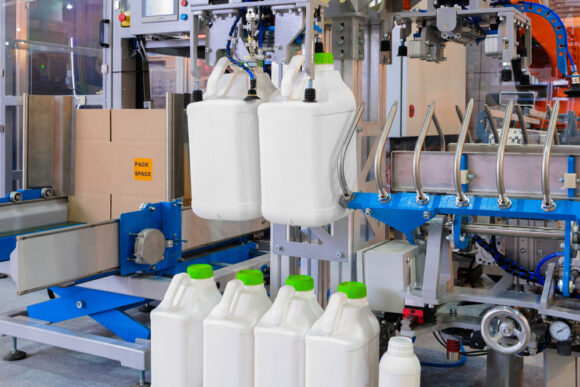
Specialty Chemical Toll Blending for Complex Formulations
Specialty chemical products often depend on precise ratios, sensitive ingredients, controlled dispersion, solubility management, particle distribution, viscosity targets, pH limits, or other specification-driven requirements. A small deviation in ingredient order, mixing time, shear level, temperature exposure, or raw material condition can affect the final product’s performance.
ITC supports manufacturers that need consistent liquid and powder chemical blending, packaging options, and shipping coordination. For specialty products, the value of an experienced toll blending partner is not just mixing ingredients. It is the ability to translate defined specifications into repeatable production through disciplined raw material handling, controlled sequencing, process documentation, batch verification, and packaging readiness.
For broader production capabilities, review ITC’s toll chemical blending services. For products that fall clearly into a liquid or dry format, see liquid blending services and powder blending services.
- Custom industrial formulations produced to defined customer specifications
- Controlled liquid or powder blending for repeatable product performance
- Batch sizes that support testing, launch, growth, or ongoing production
- Ingredient handling procedures that reduce production variability
- Packaging formats aligned with storage, handling, and distribution needs
Specialty Chemical Toll Blending Capabilities
Specialty chemical products vary by chemistry, end use, raw material behavior, batch size, packaging format, and quality requirements. ITC helps manufacturers organize those variables into a practical production path from formula intake through finished goods coordination.
| Capability Area | What ITC Supports | Why It Matters |
|---|---|---|
| Formula Review | Review of product type, ingredient sensitivity, performance targets, pH, viscosity, solubility, dispersion, stability, and packaging needs | Helps define the right production path before batching begins |
| Liquid Specialty Blending | Specialty cleaners, concentrates, emulsions, surfactant systems, additives, process chemicals, and other custom liquids | Supports complex liquid formulas that require controlled blending and packaging |
| Powder Specialty Blending | Dry blends, powders, granules, additives, performance mixtures, and specialty powder formulations | Supports uniformity, flowability, packaging stability, and repeatable dry-blend production |
| Multi-Component Production | Formulas involving surfactants, solvents, builders, chelants, dispersants, acids, bases, additives, fillers, and functional agents | Reduces risk when ingredient sequencing and compatibility matter |
| Packaging Options | Jugs, pails, drums, totes, bulk formats, private label options, and regulated packaging review where applicable | Prepares finished products for storage, distribution, and customer use |
| Quality Documentation | Batch records, production checkpoints, finished product review, packaging inspection, and release readiness checks | Improves repeatability and supports customer-defined specifications |
For formulations with branded packaging needs, ITC’s private label chemical blending and private label chemical packaging services can support product presentation, labels, fill formats, and finished goods planning.
Applications for Specialty Chemical Formulations
Specialty chemical products are often engineered for a narrow performance window. They may be designed to clean, treat, protect, disperse, lubricate, condition, stabilize, coat, modify, or enhance materials in demanding industrial and commercial environments.
Industrial Cleaning and Maintenance Products
Specialty cleaning products may include industrial cleaners, degreasers, removers, concentrates, facility care chemicals, surface preparation products, and maintenance compounds designed for demanding operating environments.
- Industrial cleaners and degreasers
- Removers and concentrates
- Facility care and surface preparation formulas
Related: industrial cleaning chemical blending and degreaser contract blending
Treatment, Process, and Additive Products
Specialty chemical programs may involve water treatment additives, process chemicals, dispersants, corrosion-related products, treatment aids, functional additives, or formulations used to support manufacturing or maintenance workflows.
- Water treatment and process chemicals
- Dispersants and functional additives
- Performance-focused specialty blends
Related: water treatment chemical blending
Liquid, Powder, and Performance-Sensitive Mixtures
Some specialty products require careful liquid dispersion, emulsion stability, surfactant compatibility, dry-blend uniformity, moisture control, or particle distribution. ITC supports products where the manufacturing process directly affects field performance.
- Surfactant and emulsion systems
- Powders, granules, and dry blends
- Custom industrial performance mixtures
Related: surfactant blending services, emulsion blending services, and powder blending services
How Specialty Chemical Toll Blending Supports Innovation
Innovation in specialty chemicals often starts with a laboratory formula, pilot batch, customer request, or performance improvement goal. However, a successful formula must also be manufacturable. Ingredients that behave predictably at bench scale may require new controls when production volume increases.
Specialty chemical toll blending supports innovation by giving manufacturers access to production capabilities without requiring immediate capital investment in dedicated infrastructure. This allows technical teams to focus on formulation strategy, product positioning, customer validation, and market expansion while ITC supports the manufacturing workflow.
When Toll Blending Helps Specialty Products Move Forward
- New product development or product line expansion
- Formula transfer from a lab, pilot process, or overloaded facility
- Commercial scale-up for customer validation or market launch
- Seasonal demand increases or short-term production needs
- Recurring outsourced production for mature specialty formulas
- Packaging changes, label changes, or new distribution requirements

Scaling Specialty Chemical Manufacturing Through Toll Blending
Scaling a specialty chemical product requires more than increasing batch size. The manufacturing process must preserve the properties that make the formulation valuable while accounting for raw material variability, addition rates, mixing dynamics, hold times, operator procedures, packaging compatibility, and documentation needs.
Production Scale-Up Support
A structured toll blending process can help manufacturers scale with greater confidence by establishing repeatable production steps. This may include reviewing formulation requirements, confirming ingredient handling needs, defining batch records, identifying packaging formats, coordinating production schedules, and documenting quality checkpoints.
- Limited validation runs before launch
- Commercial batch planning
- Repeat production procedures
- Batch records and quality checkpoints
- Packaging formats matched to product requirements
Flexible Production Capacity
Toll blending also supports capacity flexibility. A manufacturer may need a limited validation run before commercial launch, a short-term production increase during peak demand, or ongoing outsourced production for a mature product line. Instead of building or expanding internal manufacturing assets, companies can match production volume to actual demand.
- Production frequency aligned with demand
- Reduced internal equipment bottlenecks
- Support for product-line expansion
- Blending, packaging, and shipping coordination
- Less pressure on internal technical teams
For cost and production planning, ITC’s article on main toll blending cost factors explains how batch size, formula complexity, packaging, materials, and logistics influence project scope. Brands comparing internal manufacturing with outsourced production can also review outsourcing versus in-house blending.
Handling Complex Multi-Component Chemical Formulations
Many specialty chemical products contain multiple functional components. A single formulation may include surfactants, solvents, builders, chelants, dispersants, acids, bases, fragrances, colorants, corrosion inhibitors, rheology modifiers, absorbents, fillers, carriers, flow aids, emulsifiers, or other performance additives. These ingredients may not all behave the same way during production.
Liquid Specialty Formulations
For liquid products, process control may involve staged addition, mixing time control, viscosity checks, recirculation, temperature awareness, solubility management, or observation of appearance and phase behavior.
- Ingredient sequencing and addition rate control
- Viscosity, pH, appearance, and stability considerations
- Surfactant, solvent, or emulsion compatibility
- Foam, dispersion, or suspension behavior
- Packaging compatibility and storage performance
Powder Specialty Formulations
For powders, process control may involve pre-blending, controlled loading, blend-time validation, segregation awareness, moisture sensitivity, flowability review, and packaging methods that preserve uniformity after discharge.
- Homogeneity and particle distribution
- Moisture sensitivity and segregation risk
- Flowability and material handling behavior
- Dry blend packaging stability
- Batch documentation and repeatability
For product categories where liquid phase stability matters, review ITC’s emulsion blending services. For formulations where surfactant behavior is central to performance, review surfactant blending services.
Quality Assurance for Specialty Chemical Production
Quality assurance is essential in specialty chemical production because product value depends on consistency. Manufacturers need confidence that each batch aligns with the specification used to qualify the product with customers, distributors, or internal stakeholders.
Typical Quality Priorities
- Incoming raw material verification
- Batch record review and production documentation
- In-process checks during blending
- Appearance, odor, color, pH, viscosity, density, or other applicable evaluations
- Homogeneity checks for powder or dry blend products
- Final batch verification before packaging or shipment
- Retained documentation to support traceability and release decisions
Documentation and Safety Alignment
Specialty chemical products may require SDS coordination, GHS label review, hazmat packaging evaluation, and customer-facing safety documentation depending on the formula. ITC aligns chemical communication planning with OSHA Hazard Communication standards so labeling and documentation requirements can be considered before packaging and shipment.
For more detail on verification methods, ITC’s article on what QC testing is needed for blended chemical products explains common checks used to confirm blended product readiness.
What to Include When Requesting Specialty Chemical Toll Blending
Clear technical details help ITC evaluate project fit and build a more accurate production plan. Specialty products often require closer intake because ingredient behavior, packaging compatibility, and quality requirements can affect the manufacturing path.
Formula and Performance Details
- Product type and intended application
- Liquid, powder, emulsion, surfactant system, concentrate, granule, or specialty blend format
- Formula summary, spec sheet, or target performance requirements
- Desired pH, viscosity, particle distribution, solubility, dispersion, foam, appearance, or stability targets
- Ingredient sensitivities, order-of-addition concerns, or handling notes
- Raw material sourcing plan or supplied material requirements
Production, Packaging, and Shipping Details
- Target batch size and expected production frequency
- Container type, fill size, closure, and label requirements
- Private label or customer-branded packaging needs
- SDS, GHS, hazmat, or special handling requirements
- Storage conditions and temperature or moisture sensitivity
- Shipping destination, delivery window, and recurring order expectations
Specialty product manufacturers can also review ITC’s industries served for chemical toll blending overview to see how automotive, agricultural, industrial cleaning, water treatment, specialty chemical, private label, packaging, and logistics support connect across product categories.
Specialty Chemical Toll Blending FAQ
Answers to common questions about custom specialty chemical production, complex formulations, packaging, quality control, and how to request a quote from ITC.
What is specialty chemical toll blending?
Specialty chemical toll blending is outsourced production of custom or performance-driven chemical formulations by a qualified blending partner. ITC can blend liquid, powder, emulsion, surfactant-based, concentrated, and private label specialty products to customer specifications and support packaging, documentation, and shipping coordination.
What types of specialty chemicals can ITC blend?
ITC can support specialty cleaners, degreasers, removers, concentrates, water treatment additives, process chemicals, agricultural formulations, surfactant systems, emulsions, performance additives, powders, granules, dry blends, and other custom industrial chemical products. Project fit depends on formula requirements, batch size, packaging needs, and handling requirements.
Can ITC blend both liquid and powder specialty chemicals?
Yes. ITC supports liquid and powder specialty chemical blending. Liquid products may require viscosity, pH, solubility, dispersion, emulsion stability, or foam control. Powder products may require homogeneity, particle distribution, moisture control, flowability, and packaging stability.
Can ITC support private label specialty chemical products?
Yes. ITC can support private label specialty chemical products through formula-driven blending, packaging coordination, label planning, finished goods staging, and shipping support. This is useful for brands selling custom cleaners, specialty liquids, powders, additives, or other proprietary chemical products.
How does ITC help with complex multi-component formulations?
ITC helps manage complex formulas through formula review, controlled ingredient sequencing, raw material staging, process-aware mixing, in-process checkpoints, batch documentation, packaging review, and finished product checks. These controls help reduce variation when ingredients are sensitive to pH, temperature, shear, hydration, solubility, or order of addition.
Can ITC package specialty chemical products after blending?
Yes. ITC can coordinate packaging for specialty chemicals in jugs, pails, drums, totes, bulk formats, private label containers, and other formats depending on the product and distribution channel. Packaging support may also include hazmat packaging review, pallet configuration, and finished goods staging.
How do I request a quote for specialty chemical toll blending?
Use the ITC quote request form or call (563) 322-4882. Include product type, formula or spec sheet, target batch size, performance requirements, packaging format, label requirements, timeline, and shipping destination.
Request Specialty Chemical Toll Blending Services
ITC helps manufacturers produce niche liquid and powder chemical products with controlled blending, repeatable quality procedures, packaging support, and nationwide shipping coordination. Send the team your formula details, product category, batch size, packaging needs, label requirements, quality requirements, and timeline to begin the feasibility review. For related production support, review ITC’s liquid blending services and powder blending services.