
Contract Chemical Packaging Services for Industrial Manufacturers
Industrial Technology Corporation provides contract chemical packaging for manufacturers that need liquid or powder chemical products filled, packaged, labeled, staged, and prepared for storage, shipment, or customer delivery after blending, toll production, or formula scale-up.
Customer-specified containers
Label and lot control support
Warehouse and shipping coordination

Contract Packaging for Finished Chemical Products
Industrial manufacturers need packaging processes that protect product integrity, support regulatory communication, and keep finished chemicals ready for storage, shipment, and end use. A well-blended product still needs accurate filling, compatible containers, clear lot identification, label readiness, pallet planning, and careful staging before it can move through the supply chain.
ITC helps manufacturers simplify the transition from finished batch to finished goods by connecting chemical processing knowledge with packaging, warehousing, and shipping coordination. This is especially useful for companies producing industrial cleaners, degreasers, concentrates, specialty chemical products, dry blends, powders, and related formulations.
For the broader packaging overview, review ITC’s toll chemical packaging services. For branded product programs, see private label chemical packaging. For regulated packaging needs, review hazmat chemical packaging.
- Finished product packaging for liquid and powder chemical formulations
- Container planning based on batch volume, product behavior, storage, and shipment needs
- Label and lot identification support for packaging consistency and traceability
- Palletizing and staging so packaged goods are ready for warehousing or outbound movement
- Shipping coordination through ITC’s warehouse and shipping coordination capabilities
Contract Chemical Packaging Capabilities
Contract packaging requirements vary by product type, container, fill volume, label needs, production frequency, and distribution plan. ITC helps organize those requirements into a repeatable workflow that supports finished-goods readiness.
| Capability Area | What ITC Supports | Why It Matters |
|---|---|---|
| Packaging Intake | Review of product type, finished batch requirements, container needs, label expectations, batch size, and shipping timeline | Helps identify packaging issues before filling begins |
| Liquid Chemical Packaging | Cleaners, degreasers, concentrates, solvents, specialty liquids, water treatment products, automotive chemicals, and other liquid formulas | Supports packaging formats matched to viscosity, handling, and customer use |
| Powder Chemical Packaging | Dry blends, powdered cleaners, additives, specialty powders, bags, boxes, jugs, drums, and compatible dry-product formats | Helps protect flowability, uniformity, storage stability, and shipment handling |
| Container and Fill Support | Bottles, jugs, pails, drums, totes, bulk formats, lined containers, and customer-specified packaging formats | Matches packaging to product chemistry, order size, and distribution requirements |
| Label and Lot Control | Label support, product identification, lot codes, batch traceability, customer documentation, and finished-goods review | Improves traceability and reduces customer-facing packaging errors |
| Warehouse and Shipping Coordination | Pallet configuration, finished goods staging, carrier scheduling, delivery planning, and outbound coordination | Moves packaged product from production to customer delivery more efficiently |
Manufacturers that also need chemical production support can start with liquid blending services, powder blending services, or specialty chemical toll blending.
What Contract Chemical Packaging Services Include
Contract chemical packaging services include the activities required to prepare a completed chemical batch for storage, shipment, or customer delivery after blending or production.
Filling and Packaging Execution
ITC can support filling liquid chemical products into approved containers and packaging powder or dry chemical products into appropriate formats. The packaging path depends on the product type, handling needs, container size, and customer requirements.
- Liquid product filling
- Powder and dry product packaging
- Customer-specified container workflows
Labeling, Lot Control, and Traceability
Packaged chemical products need clear identification and consistent traceability. ITC can support customer-supplied labeling workflows, lot identification, batch records, packaging verification, and finished product review before goods are staged.
- Label-ready workflows
- Lot control and batch identification
- Packaging verification against specifications
Staging and Shipping Coordination
After packaging, finished goods often need pallet configuration, warehouse staging, carrier scheduling, and delivery planning. ITC helps connect packaging timelines with outbound logistics so finished product can move more predictably.
- Palletizing and staging
- Warehouse coordination
- Shipment planning
Packaging Solutions for Liquid and Powder Chemical Products
Liquid and powder chemical products require different packaging strategies. ITC supports both formats, giving manufacturers a single partner for multiple chemical packaging needs.
Liquid Chemical Packaging
Liquids may need containers that account for viscosity, chemical compatibility, headspace, dispensing method, sealing method, shipping weight, temperature exposure, and customer handling. A low-viscosity liquid may require different filling controls than a thick concentrate or high-solids blend.
- Cleaners, degreasers, and concentrates
- Specialty liquids and solvent-based products
- Water treatment and automotive chemical products
- Jugs, pails, drums, totes, and bulk formats
- Closure, seal, and pallet configuration review
Powder Chemical Packaging
Powders require packaging that helps reduce moisture exposure, contamination risk, material loss, dusting, and segregation. A disciplined packaging process helps protect the value created during blending by keeping the finished product consistent from the first container to the last.
- Dry blends and powdered cleaners
- Additives and specialty powder formulations
- Bags, boxes, fiber containers, jugs, and drums
- Flowability, dusting, and moisture considerations
- Storage, pallet, and carrier handling planning
For products that need both manufacturing and packaging, ITC can support the workflow from production to finished goods. Review bulk chemical filling services for a practical explanation of when fill formats and package-size planning become important.
Types of Containers Used in Chemical Packaging
Chemical packaging may use several container formats depending on the product, order size, downstream handling requirements, and shipping method. The correct choice depends on compatibility, durability, fill volume, closure style, storage conditions, label requirements, pallet configuration, and customer use.
Container Selection for Contract Chemical Packaging
Container selection is not only a purchasing decision. It is part of the product’s technical and logistical design. A container must protect the formulation, fit the customer’s handling environment, support labeling requirements, and move efficiently through warehousing and transportation.
- Bottles and jugs for smaller pack sizes and controlled dispensing
- Pails for moderate-volume liquid or powder products
- Drums for industrial liquid, powder, or bulk chemical applications
- Totes for high-volume liquid chemical storage and shipment
- Bags or lined containers for powder and dry blended materials
- Customer-specified containers for branded or specialized programs
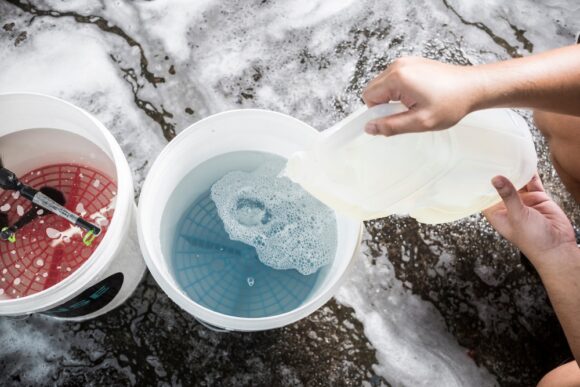
Scaling Chemical Production with Contract Packaging
Scaling chemical production is not only a blending challenge. It is also a packaging, storage, and logistics challenge. As demand grows, manufacturers must maintain batch consistency while increasing throughput and meeting delivery expectations.
How Contract Packaging Supports Growth
- Reduces the need for in-house filling and packaging equipment
- Improves speed from finished batch to shipment-ready product
- Packages multiple product formats through one service relationship
- Supports seasonal or demand-driven volume changes
- Supports pilot, small-batch, and recurring production programs
- Coordinates warehousing and outbound shipping more efficiently
- Maintains greater consistency across repeat production runs
Reducing Packaging Bottlenecks
When production volume increases, packaging bottlenecks can delay shipments and create inventory pressure. Manual filling, limited storage capacity, inconsistent labeling, and inefficient staging can all slow growth. By outsourcing packaging to ITC, manufacturers can align production schedules with finished goods preparation and reduce the operational burden on internal teams.
For manufacturers comparing internal production and outside support, ITC’s article on outsourcing versus in-house blending explains how equipment, labor, batch size, and overhead can affect the decision.
Quality Control and Compliance in Chemical Packaging
Chemical packaging requires attention to quality control, documentation, and communication. Each packaged product should reflect the correct formulation, container size, label information, lot identity, and customer specification. Even small packaging errors can affect safety, traceability, inventory accuracy, and customer confidence.
Packaging Quality Checks May Include
- Container type and fill quantity verification
- Closure application and seal review
- Label alignment and product identification checks
- Lot identification and batch traceability review
- Pallet configuration and staging checks
- Finished product release readiness review
- Customer specification confirmation before shipment
Documentation and Safety Communication
Manufacturers must consider hazard communication, product labeling, SDS alignment, storage requirements, and transportation expectations. ITC aligns chemical communication planning with OSHA Hazard Communication standards so labeling and documentation requirements can be considered before packaging and shipment.
For regulated products, review hazmat chemical packaging. For finished product verification planning, ITC’s article on what QC testing is needed for blended chemical products explains common checks used before release.
ITC’s technical approach helps manufacturers maintain confidence in the transition from production to packaged product. By combining blending knowledge with packaging and shipping coordination, ITC helps reduce fragmentation in the manufacturing process.
What to Include When Requesting Contract Chemical Packaging
Clear product, container, label, and shipping details help ITC evaluate fit and build a more accurate packaging plan. The more information you provide upfront, the faster the team can confirm next steps.
Product and Packaging Details
- Product type and intended application
- Liquid, powder, concentrate, solvent, degreaser, cleaner, or specialty chemical format
- Formula summary, spec sheet, or finished product requirements
- Container type, fill size, closure, and packaging format
- Target batch size and expected production frequency
- Storage conditions, handling constraints, or compatibility concerns
Labeling, Compliance, and Fulfillment Details
- Customer-supplied label requirements or private label needs
- Lot code, batch code, or traceability requirements
- SDS, GHS, hazmat, or special handling requirements
- Documentation and finished-goods release requirements
- Pallet configuration, warehousing, or staging needs
- Shipping destination, delivery window, and distribution model
Manufacturers planning both blending and packaging can start with ITC’s toll chemical blending services. If finished goods need outbound delivery planning, review warehouse and shipping coordination.
Contract Chemical Packaging FAQ
Answers to common questions about contract chemical packaging, container formats, labels, compliance, warehouse support, and quote requirements.
What is contract chemical packaging?
Contract chemical packaging is outsourced packaging support for finished chemical products. ITC can help fill, package, label, stage, and coordinate shipment planning for liquid or powder chemical products after blending, toll production, or formula scale-up.
What types of chemical products can ITC package?
ITC can support contract packaging for cleaners, degreasers, concentrates, solvents, specialty liquids, water treatment products, automotive chemicals, industrial cleaning products, agricultural products, dry blends, powdered cleaners, additives, and specialty powder formulations. Project fit depends on product requirements, packaging format, handling needs, and distribution plan.
Can ITC package both liquid and powder products?
Yes. ITC supports contract packaging for liquid and powder products. Liquid products may require bottles, jugs, pails, drums, totes, or bulk formats. Powder products may require bags, boxes, jugs, fiber containers, drums, or other dry-product formats depending on flowability, moisture sensitivity, and handling requirements.
Can ITC support customer-specified containers and labels?
Yes. ITC can work with customer-specified containers, packaging formats, label requirements, lot code needs, traceability details, and finished-goods expectations when the project fits facility capabilities and supplied product requirements.
Can ITC coordinate warehousing and shipping after contract packaging?
Yes. ITC can coordinate finished goods staging, pallet configuration, carrier scheduling, and delivery planning through warehouse and shipping support. Include shipping destinations, delivery windows, and distribution requirements when requesting a quote.
Can ITC package regulated or hazmat chemical products?
ITC can support regulated products through hazmat chemical packaging when the project fits facility capabilities and customer-supplied requirements. Customers should provide SDS details, hazmat classifications, label content, and special handling notes during the quote request process.
How do I request a quote for contract chemical packaging?
Use the ITC quote request form or call (563) 322-4882. Include product type, formula or spec sheet, batch size, packaging format, fill size, label requirements, SDS or hazmat notes, timeline, and shipping destination.
Request Contract Chemical Packaging Services
ITC helps manufacturers move from finished batch to packaged, labeled, staged, and shipment-ready product. Send the team your product type, batch size, container requirements, labeling needs, SDS or hazmat notes, shipping destination, and timeline to begin the feasibility review. For the complete packaging overview, review ITC’s toll chemical packaging services.