
Degreaser Contract Blending for Industrial Cleaning Products
Industrial Technology Corporation provides degreaser contract blending for manufacturers and private label brands that need consistent liquid, powder, concentrated, or ready-to-use degreaser products with repeatable batch control, packaging support, and shipping coordination from ITC’s Davenport, Iowa facility.
Private label degreaser support
Liquid and powder production
Packaging and shipping coordination
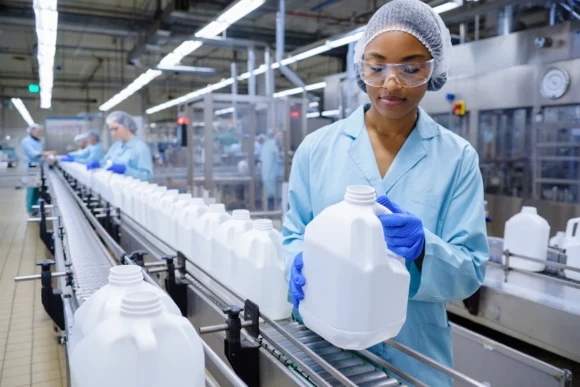
Contract Degreaser Manufacturing for Heavy-Duty Cleaning Formulations
Degreaser manufacturing requires more than mixing cleaning ingredients together. Heavy-duty cleaning products need the right balance of surfactants, builders, solvents, coupling agents, alkalinity sources, corrosion inhibitors, foam modifiers, dyes, fragrances, and stabilizers. Each ingredient affects cleaning strength, rinseability, substrate compatibility, clarity, odor, viscosity, and long-term stability.
ITC supports degreaser programs for automotive, industrial maintenance, manufacturing, fleet, janitorial, equipment cleaning, facility maintenance, and specialty chemical markets. Whether a customer needs a high-alkaline concentrate, a ready-to-use maintenance cleaner, a powder degreaser, or a branded private label product, ITC helps translate the formulation into a repeatable production workflow.
For related liquid formulation support, ITC’s liquid blending services cover cleaners, concentrates, emulsions, and specialty liquids. For surfactant-driven degreaser systems, see surfactant blending services.
- Formula-driven production for supplied or refined degreaser specifications
- Liquid and powder options for concentrates, ready-to-use blends, and dry cleaning programs
- Process control for ingredient sequencing, mixing time, pH, viscosity, clarity, and foam profile
- Packaging support through ITC’s chemical blending and packaging capabilities
- Finished goods logistics through warehouse and shipping coordination
Degreaser Contract Blending Services and Production Capabilities
Degreaser products vary widely by chemistry, end-use environment, packaging format, and performance target. ITC helps manufacturers organize those requirements into a controlled production plan from formula intake through packaging and shipment.
| Capability Area | What ITC Supports | Why It Matters |
|---|---|---|
| Formula Review | Review of product type, cleaning target, pH range, active concentration, viscosity, clarity, foam profile, and application method | Helps define the right production approach before batching begins |
| Liquid Degreaser Blending | Concentrates, semi-concentrates, ready-to-use blends, solvent-assisted formulas, surfactant systems, and alkaline cleaners | Supports commercial and industrial cleaning products at repeatable batch volumes |
| Powder Degreaser Blending | Dry blends for dilution, institutional cleaning programs, storage efficiency, and specialty cleaning applications | Gives brands flexibility beyond liquid-only degreaser formats |
| Private Label Support | Branded degreaser production, label coordination, package selection, repeat runs, and finished goods presentation | Helps chemical brands scale without adding internal manufacturing capacity |
| Packaging Options | Bottles, gallons, pails, drums, totes, bulk formats, pallet configuration, and regulated packaging review where applicable | Prepares finished degreaser products for storage, distribution, and field use |
| Quality Documentation | Batch records, production checkpoints, finished product review, packaging inspection, and release readiness checks | Improves repeatability and protects brand consistency |
For branded cleaning products, ITC’s private label chemical blending can support formula-driven manufacturing, packaging, labeling, and outbound planning. For container-specific support, see private label chemical packaging.
Applications for Custom Degreaser Formulations
Custom degreaser products are used wherever oils, greases, carbon soils, lubricants, fuels, hydraulic fluids, cutting oils, grime, and particulate contamination must be removed efficiently.
Automotive and Fleet Degreasers
Automotive degreasers may be used on engines, transmissions, tools, undercarriage components, shop floors, service bay equipment, wheels, fuel areas, trucks, trailers, and maintenance equipment. These products often need strong wetting, oil emulsification, rinseability, and substrate compatibility.
- Engine and equipment degreasers
- Fleet maintenance cleaners
- Shop floor and service bay formulas
Related: automotive chemical blending, car wash chemical blending
Industrial Maintenance Degreasers
Industrial maintenance degreasers support machinery, conveyors, pumps, motors, frames, production lines, tooling, facility surfaces, and manufacturing environments. These products may need high alkalinity, foam control, corrosion inhibition, or compatibility with specific materials.
- Machinery and equipment cleaning
- Production line maintenance
- Heavy-duty facility cleaning
Private Label Cleaning Products
Private label brands use contract blending to build degreaser product lines without investing in tanks, mixers, raw material storage, packaging lines, or additional production labor. ITC can support branded concentrates, ready-to-use cleaners, powder degreasers, and specialty formulas.
- Distributor and janitorial supply products
- Branded chemical product lines
- Recurring production and packaging support
Related: private label chemical blending
How Degreaser Contract Blending Supports Private Label Products
Private label degreaser products must perform consistently because end users judge the brand by each container, each dilution, and each cleaning result. Contract blending gives brands a way to launch, scale, or refine degreaser products without building in-house chemical production capacity.
ITC can support formula transfer, batch scale-up, packaging selection, label coordination, inventory planning, repeat production, and shipment preparation. That support is valuable for degreasers sold through distributors, automotive supply networks, janitorial channels, e-commerce programs, maintenance suppliers, and B2B cleaning product lines.
Private Label Degreaser Options
- Concentrated formulas for lower freight and storage impact
- Ready-to-use degreasers for convenience and consistent dilution
- High-alkaline formulas for demanding industrial soils
- Solvent-assisted formulas for specialized grease removal
- Low-foam or controlled-foam formulas for automated equipment
- Powder degreasers for dry storage or dilution programs

Manufacturing and Packaging Options for Degreaser Products
Degreaser products can be manufactured in different formats depending on chemistry, distribution strategy, customer use case, and handling requirements. ITC coordinates blending and packaging so the finished product is aligned with how it will be stored, shipped, diluted, and used.
Production Formats
Liquid degreasers may be produced as concentrates, semi-concentrates, or ready-to-use blends. Powder degreasers may be produced for dry storage, institutional dilution, industrial cleaning programs, or specialty applications where dry chemistry is preferred.
- Liquid concentrates and semi-concentrates
- Ready-to-use cleaning formulas
- Powder and dry blend degreasers
- Solvent-assisted and surfactant-based products
- Alkaline and specialty cleaning systems
Packaging Considerations
Packaging must match the chemistry, handling environment, and customer use case. Industrial degreasers may be packaged in bottles, gallons, pails, drums, totes, or bulk formats depending on volume and distribution needs.
- Container compatibility and chemical resistance
- Closure type and dispensing method
- Label requirements and brand presentation
- Pallet configuration and storage conditions
- Hazmat evaluation and regulatory labeling requirements
ITC’s chemical blending and packaging page explains available packaging formats and how container planning connects to production. For finished product staging and carrier coordination, see warehouse and shipping.
Common Ingredients Used in Industrial Degreaser Blends
Industrial degreaser formulations are built from functional ingredient systems. Each component contributes to cleaning performance, product stability, appearance, handling, storage, or end-use behavior.
Surfactants and Wetting Agents
Surfactants reduce surface tension, improve wetting, emulsify oils, suspend soils, and help lift grease from hard surfaces. Surfactant selection affects foam, rinseability, soil removal, and formula stability.
Related: surfactant blending services
Builders, Alkalinity, and Water Conditioners
Builders and alkalinity sources improve soil removal, help saponify certain fats and oils, and increase cleaning strength. Chelating agents and water conditioners help maintain cleaning performance in hard water.
Solvents, Stabilizers, and Performance Additives
Solvents, coupling agents, corrosion inhibitors, foam modifiers, fragrances, dyes, preservatives, and stabilizers can all influence product behavior. Powder degreasers may also require carriers, flow aids, or dry processing aids.
Formulation chemistry must be evaluated carefully because ingredients can interact in ways that affect clarity, viscosity, odor, stability, separation, substrate safety, or cleaning efficiency. A controlled blending process helps preserve the intended balance from raw material charging through final packaging.
Quality Testing for Heavy-Duty Cleaning Formulations
Quality testing is essential for degreaser products because small variations in concentration, pH, viscosity, surfactant balance, clarity, color, odor, or foam profile can affect field performance. Heavy-duty cleaning formulations often operate under demanding conditions, including high soil loads, variable water quality, temperature changes, mechanical agitation, soaking, spray application, pressure washing, and repeated dilution.
Typical Quality Checks
- pH measurement and specification review
- Viscosity, density, or specific gravity checks
- Appearance, color, odor, and clarity evaluation
- Solids content or active concentration review where applicable
- Foam behavior, dilution behavior, or cleaning performance checks when required
- Packaging inspection and release readiness confirmation
Documentation and Safety Alignment
Degreaser products may require SDS coordination, GHS label review, hazmat packaging evaluation, and customer-facing safety documentation depending on the formula. ITC aligns chemical communication planning with OSHA Hazard Communication standards so labeling and documentation requirements can be considered before packaging and shipment.
For more detail on verification methods, ITC’s article on what QC testing is needed for blended chemical products explains common checks used to confirm blended product readiness.
What to Include When Requesting Degreaser Contract Blending
Clear formulation, packaging, and performance details help ITC evaluate fit, production requirements, and next steps. The more detail provided upfront, the faster the team can build a realistic path from intake to production.
Formula and Performance Details
- Product type and intended cleaning application
- Liquid, powder, concentrate, or ready-to-use format
- Formula summary, spec sheet, or target performance requirements
- Desired pH range, viscosity, clarity, foam level, or dilution ratio
- Target soils, substrates, and application method
- Raw material sourcing plan or supplied material notes
Production, Packaging, and Shipping Details
- Target batch size and production frequency
- Container type, fill size, closure, and label requirements
- Private label or branded packaging needs
- SDS, GHS, hazmat, or special handling requirements
- Storage conditions and temperature sensitivity
- Shipping destination, delivery window, and recurring order expectations
For cost planning, ITC’s article on the main toll blending cost factors covers how batch size, formula complexity, packaging, materials, and logistics influence production planning. Brands comparing internal manufacturing with outsourcing can also review outsourcing versus in-house blending.
Degreaser Contract Blending FAQ
Answers to common questions about contract degreaser manufacturing, private label production, packaging, quality control, and how to request a quote from ITC.
What is degreaser contract blending?
Degreaser contract blending is outsourced production of degreaser products to a qualified chemical blending partner. ITC can blend liquid, powder, concentrated, ready-to-use, and private label degreaser products to customer specifications and support packaging, documentation, and shipping coordination.
What types of degreasers can ITC blend?
ITC can support industrial maintenance degreasers, automotive degreasers, fleet cleaning products, heavy-duty cleaning concentrates, ready-to-use cleaners, powder degreasers, solvent-assisted formulas, alkaline degreasers, and surfactant-based cleaning products. Product fit depends on formula requirements, batch size, packaging needs, and handling requirements.
Can ITC manufacture private label degreaser products?
Yes. ITC can support private label degreaser products through formula-driven blending, packaging coordination, label planning, finished goods staging, and shipping support. This is useful for brands selling degreasers through distributors, automotive channels, janitorial suppliers, e-commerce, or business-to-business cleaning programs.
Can ITC package degreaser products after blending?
Yes. ITC can coordinate packaging for degreaser products in bottles, gallons, pails, drums, totes, and bulk formats depending on the product. Packaging support may also include private label options, hazmat packaging review, pallet configuration, and finished goods staging.
What quality checks are common for degreaser products?
Common quality checks may include pH, viscosity, density or specific gravity, appearance, color, odor, clarity, solids content, dilution behavior, foam profile, stability observation, and packaging inspection. The exact checks depend on the formula and release requirements.
Can ITC support hazmat or regulated degreaser products?
ITC can support regulated degreaser products through hazmat chemical packaging, SDS coordination, GHS labeling support, and container selection aligned with product handling requirements. Customers should provide SDS information, hazmat classifications, and special handling notes during the quote request process.
How do I request a quote for degreaser contract blending?
Use the ITC quote request form or call (563) 322-4882. Include product type, formula or spec sheet, target batch size, cleaning application, packaging format, label requirements, timeline, and shipping destination.
Request Degreaser Contract Blending Services
ITC helps manufacturers and private label brands produce degreaser products with controlled blending, repeatable quality procedures, packaging support, and nationwide shipping coordination. Send the team your formula details, target soil profile, batch size, packaging needs, label requirements, and timeline to begin the feasibility review. For related production support, review ITC’s industrial cleaning chemical blending and liquid blending services.